
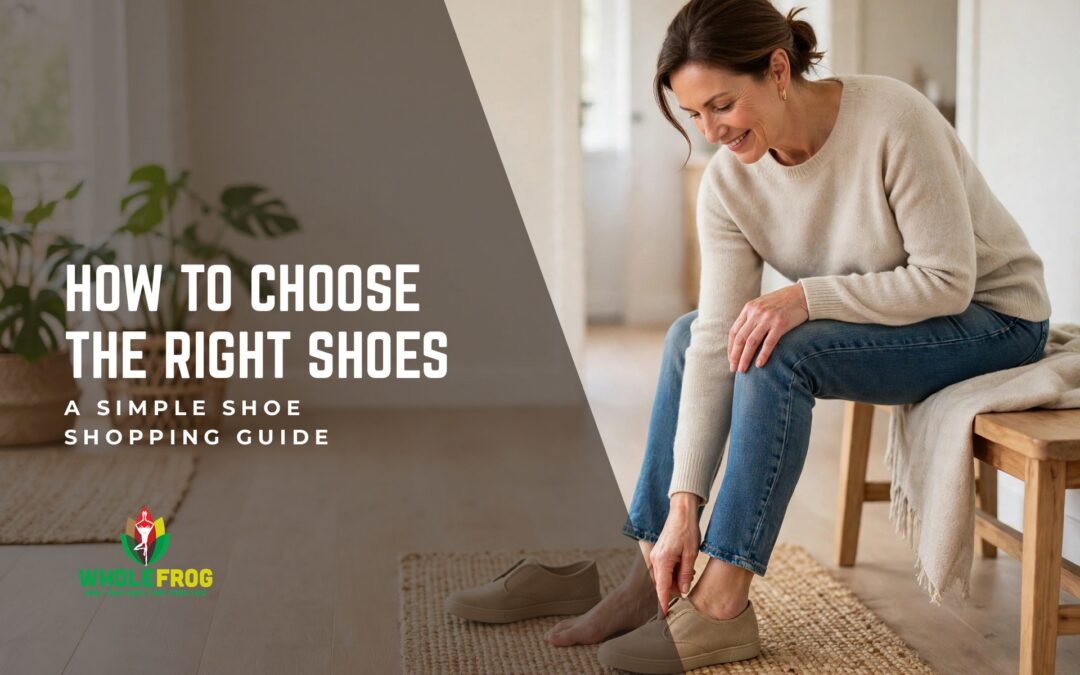
Ever bought shoes that felt great in the store, then hurt by lunchtime? You are not alone. Knowing how to choose the right shoes can save your feet a lot of trouble.
This shoe shopping guide gives you five simple fit checks. Each one takes about a minute in the store. Last week we covered foot strengthening tools. This week we look at the shoes your feet live in.
How to Choose the Right Shoes: Why Fit Comes First
Your shoes shape how your feet move all day. A shoe that squeezes your toes limits what your foot can do. A shoe with room lets your foot spread, grip, and balance.
Earlier in this series, we asked whether supportive shoes build strong feet. Fit is the first step in that story. Even a great shoe is wrong if it is the wrong shape for your foot.
Shoe Shopping Guide, Step 1: Shop Late in the Day
Feet swell as the day goes on. HealthLink BC notes that your foot size can change by about half a size between morning and evening. So shop in the afternoon or evening. Your feet are at their largest then. A shoe that fits at that hour will fit all day.
Shoe Fit Tips, Step 2: Measure Both Feet While Standing
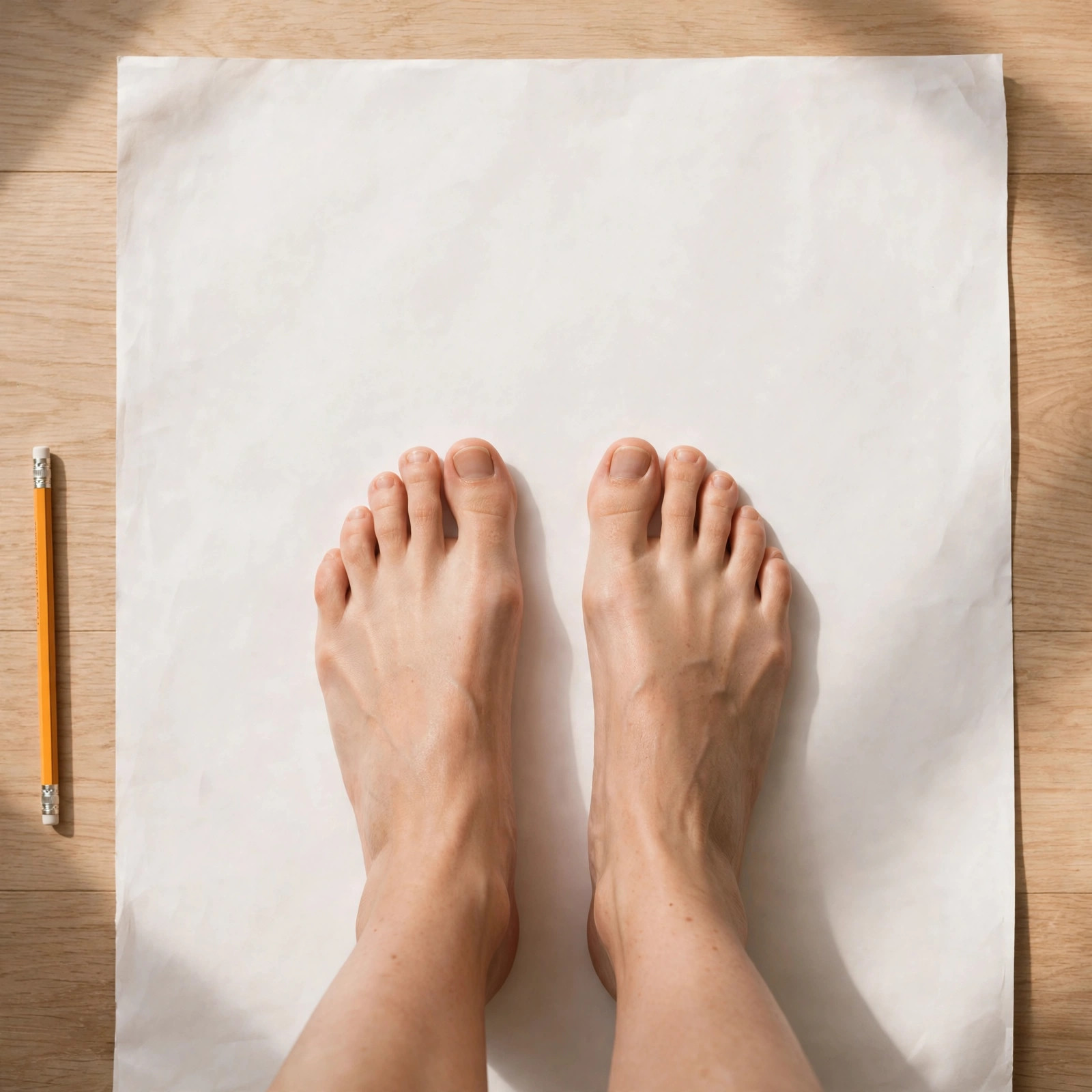 Most people have one foot slightly bigger than the other. HealthLink BC and Penn State’s wellness team both say to measure both feet. Then fit the shoe to the larger one.
Stand up while you are measured. Your feet spread out under your body weight. Do not trust the size printed inside the shoe. Sizes change from brand to brand, so go by feel. A size 10 may be better than a 9 if it feels more comfortable.
How to Choose the Right Shoes, Step 3: Look for Wide Toe Box Shoes
Your toes need room to spread and wiggle. Pick a shoe shape that matches the widest part of your forefoot. Then leave about a finger’s width past your longest toe. HealthLink BC suggests this too.
Here is a simple check you can try at home. Take the insole out of the shoe. Stand on it barefoot. If your foot spills over the edges, the shoe is too narrow.
Narrow, pointed shoes crowd the toes. FootCareMD is the patient site of the American Orthopaedic Foot and Ankle Society. It says shoes that narrow toward the toe can push the smaller toes into a bent position. Their advice for bunions and hammertoes starts the same way: roomy toe boxes. Our next post looks at bunions and other toe conditions.
Shoe Fit Tips, Step 4: Test the Heel and Walk Around
Your heel should sit snug with very little slipping. Your toes should wiggle freely. Walk around the store in both shoes, not just one. Notice any rubbing or pinching.
Do not count on a break-in period. Penn State’s wellness team says shoes should feel comfortable when you buy them. If a shoe pinches in the store, move on.
How to Choose the Right Shoes, Step 5: Let Your Foot Move
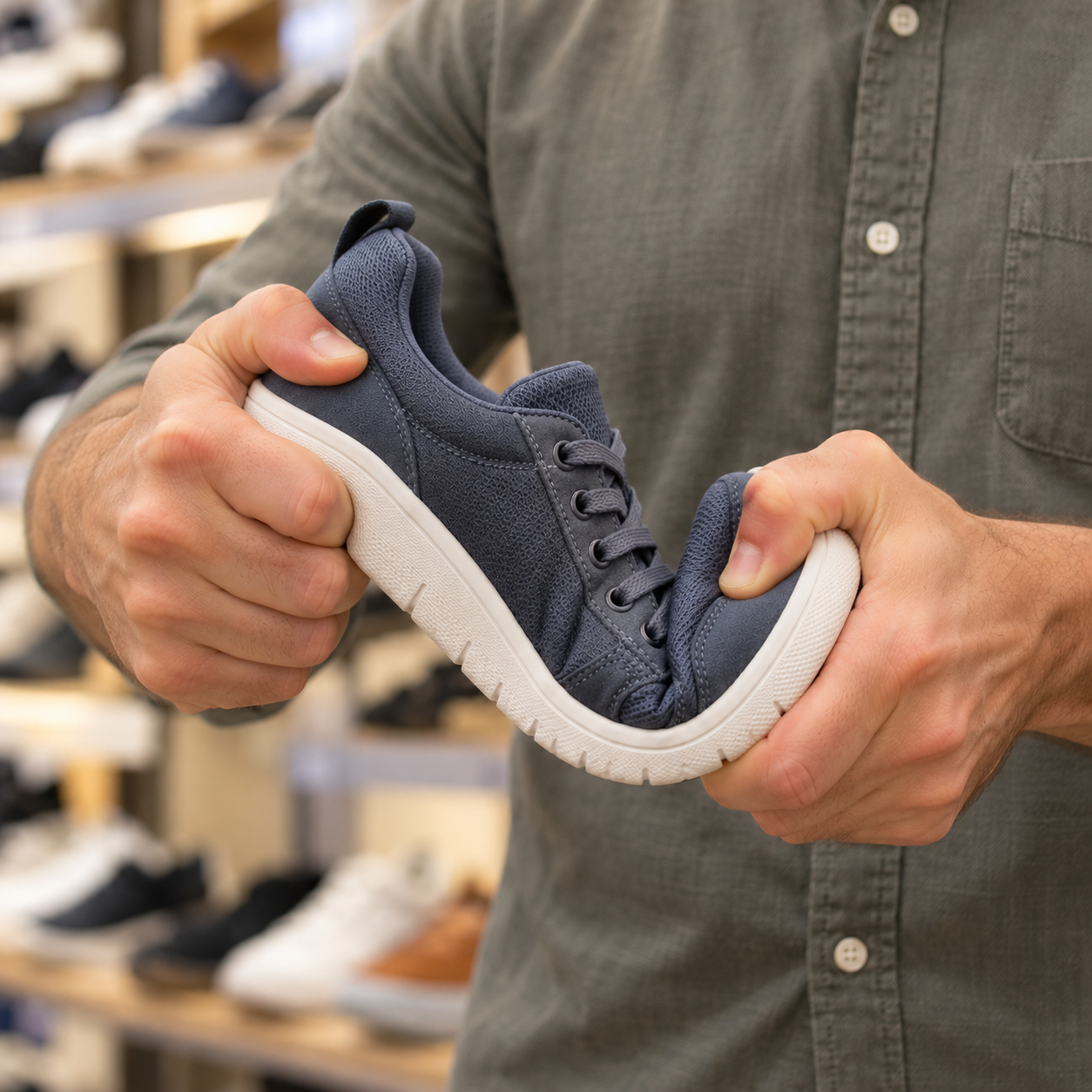 A good shoe lets your foot bend, spread, and grip the ground. Try bending the shoe in your hands. See if it flexes where your toes flex. Very stiff, thick shoes may leave your small foot muscles with less to do.
Remember the 57 runners from our shoe strength post? Walking in minimalist shoes built their foot muscles about as well as exercises did. The researchers suggested that changing shoes may be easier to stick with than an exercise plan.
That fits what we teach at WholeFrog®. Feet get stronger when they have room to work.
Ease Into Roomier Shoes
If you have worn narrow shoes for years, ease in. Shoes that fit your feet well still need a gentle start. Wear your new pair for short stretches at first. Add more time each week as your feet adjust.
If a provider gave you orthotics or special shoes, keep using them. Ask that provider before you change anything. HealthLink BC also says people with foot problems should check with their doctor.
When Shoe Fit Tips Are Not Enough
Good shoes help, but they do not do everything. If foot pain lingers, keeps coming back, or limits your walking, get support. Our massage therapy and myofascial release sessions work on the fascia from the ground up. Shoe fit tips and hands-on care work well together.
Sudden severe pain, swelling, numbness, or pain after a fall needs a qualified provider right away. Please do not wait on those.
Want a guided plan? Our FullRange Online course teaches simple self care tools you can use anywhere. You can also read why foot health matters for your whole body.
Next week, we wrap up the Foot Fix series. We cover a healing timeline, plus bunions and other common foot conditions.
Now you know how to choose the right shoes for your feet. Our team includes R.N.’s, medical rehabilitative specialists, trained Full Range coaches, and certified massage therapists. They look at your whole body, not just your feet.
That’s the power of becoming a WholeFrog®: mastering your body through our FullRange program.
Don’t just take our word for it, we have 100’s of reviews on Yelp and Google!
If you don’t have time to be sidelined, book a consultation or one of our services with the Navy Seals of Wellness.
New to WholeFrog®? Please complete our New Client Intake Form at least 24 hours before your visit, whether you’re booking a complimentary consultation or a service. If you have X-ray, MRI, or lab reports you’d like us to review before your visit, please scan and upload them here.