

Does a more supportive shoe mean a stronger foot? At first, it sounds logical. Thick padding and a firm arch feel like protection. But foot strength vs supportive shoes is a more interesting story than that.
This post covers what your feet already do on their own. It also shares what research suggests and one simple habit you can start today.
Foot Strength vs Supportive Shoes: What Your Feet Already Do
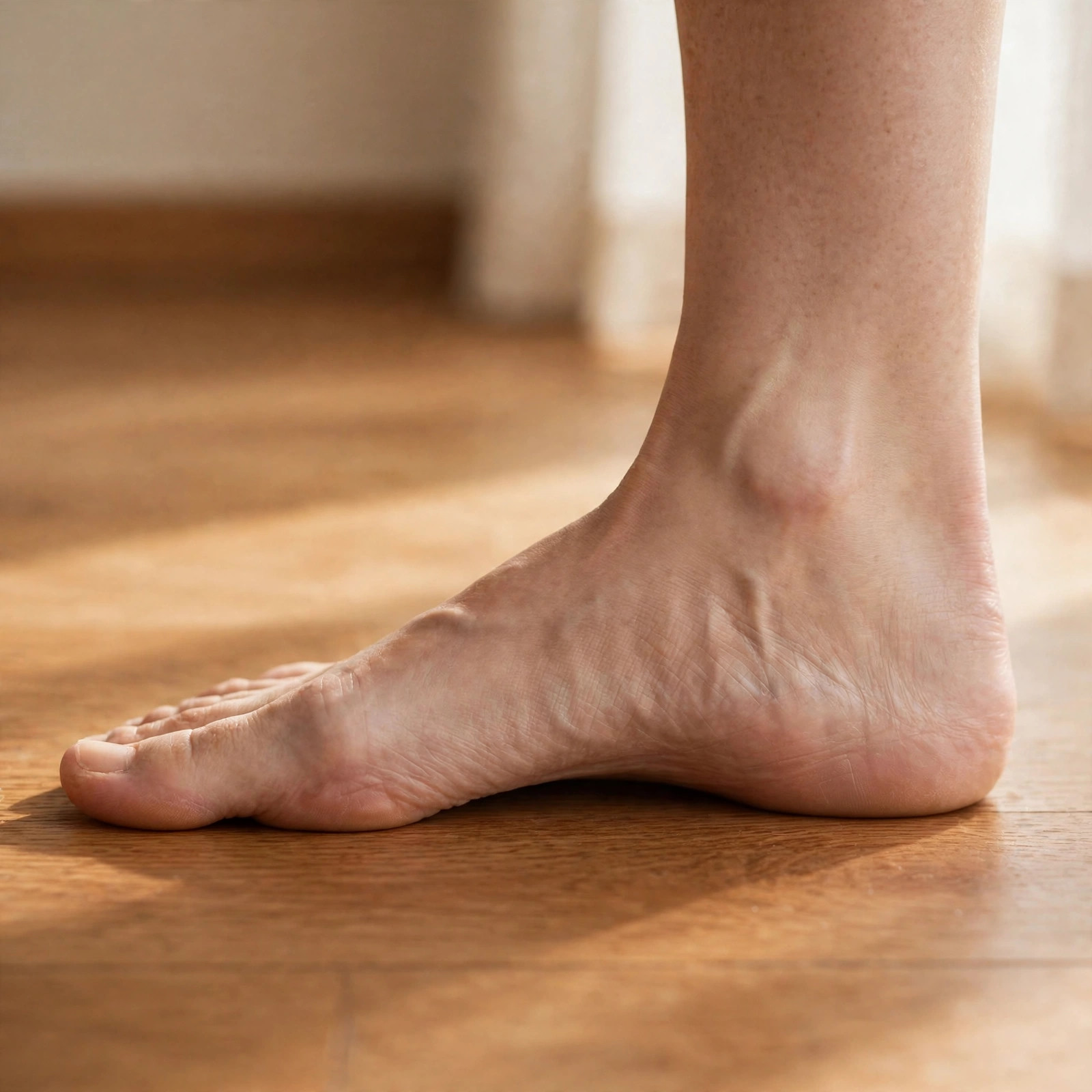 Each foot has its own built in support team. Inside are layers of small muscles called intrinsic foot muscles. Together, researchers call this group the foot core.
These muscles help hold your arch in place. They also absorb shock and help you balance on uneven ground. As a result, strong feet start with a working foot core.
Like any muscle, they respond to use. For example, muscles that get less work can get weaker over time. Supportive shoes may take over some of that work. When that happens, the foot may have less reason to do its own job.
Do Supportive Shoes Build Strong Feet? What Research Suggests
So, here is the honest answer. Researchers think cushioned, supportive shoes may reduce how hard small foot muscles work. That is a reasonable idea, but not a proven fact. In fact, no study has directly tested whether supportive insoles weaken foot muscles.
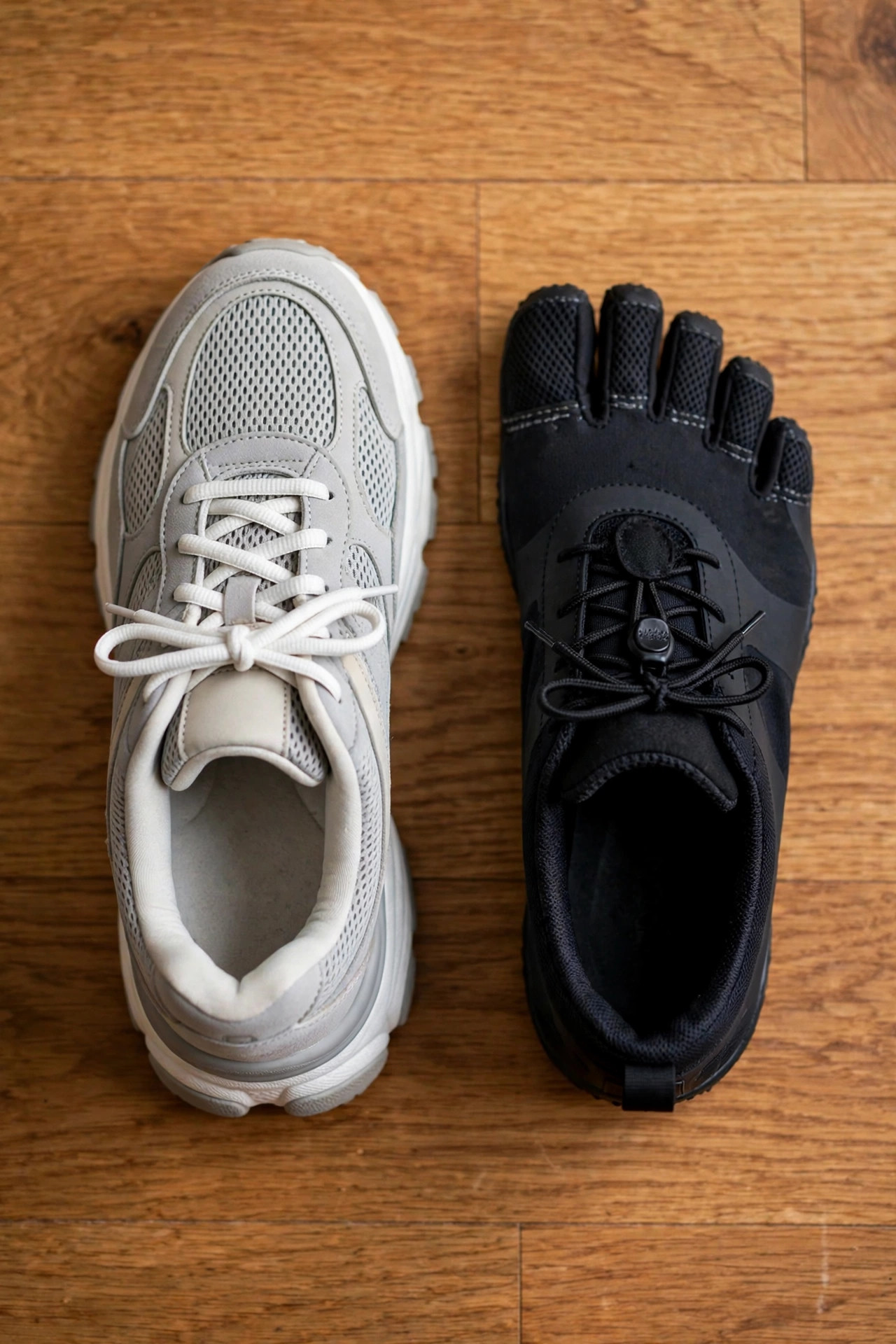 However, what we do know is more encouraging. In 2019, researchers followed 57 runners for eight weeks. First, one group walked in minimalist shoes. Second, another group did a foot strengthening program. Finally, the third group changed nothing.
Overall, both active groups built bigger, stronger foot muscles. Meanwhile, the group that changed nothing did not. Walking in minimalist shoes did about as much as the exercise program. Therefore, this shows strong feet respond to a challenge.
A Simple Way to Build Strong Feet at Home
Start with the short foot exercise. Foot core researchers favor it because it takes less than a minute.
Stand or sit barefoot with your foot flat on the floor. Next, gently draw the ball of your foot back toward your heel. Do not curl your toes. Then you should feel your arch lift a little.
Hold for five seconds, then relax. Repeat ten times on each foot. Keep it gentle, like a small squeeze rather than a strain.
Barefoot time at home helps too. For example, walk around your house without shoes for a few minutes a day. Add more time slowly as your feet feel ready. Strong feet are built gradually, not overnight.
Foot Strength vs Supportive Shoes: Go Slowly and Listen to Your Body
 This is not a call to throw away your shoes. Foot strength vs supportive shoes is not an all or nothing choice. In addition, some people truly benefit from insoles or orthotics.
If a provider recommended supportive shoes or orthotics for you, keep using them. Ask that provider before you change anything. Also, feet used to a lot of support need time to adjust.
Ease in with short barefoot periods and a few gentle reps. If something hurts, back off. Ongoing foot pain, however, deserves a conversation with a qualified provider.
Missed last week? Our post on barefoot vs shoes foot development shows how feet change from baby to grown. Likewise, our earlier post on why foot health matters explains how your feet connect to the whole body.
Where Foot Strength vs Supportive Shoes Leads in the Foot Fix Series
Next week, the Foot Fix series turns to plantar fasciitis. We explain it in plain language and share simple principles for caring for your feet.
Strong feet are part of the whole-body approach behind our FullRange Online course. Similarly, our massage therapy and myofascial release sessions work that same fascial chain from the ground up.
You might wear supportive shoes or go barefoot at home. Either way, foot strength vs supportive shoes does not have to be a fight. Our team includes R.N.’s, medical rehabilitative specialists, trained Full Range coaches, and certified massage therapists. Instead, they treat feet as part of that same whole-body picture, not as an afterthought.
That’s the power of becoming a WholeFrog®: mastering your body through our FullRange program.
Don’t just take our word for it, we have 100’s of reviews on Yelp and Google!
If you don’t have time to be sidelined, book a consultation or one of our services with the Navy Seals of Wellness.
New to WholeFrog®? Please complete our New Client Intake Form at least 24 hours before your visit, whether you’re booking a complimentary consultation or a service. If you have X-ray, MRI, or lab reports you’d like us to review before your visit, please scan and upload them here.