
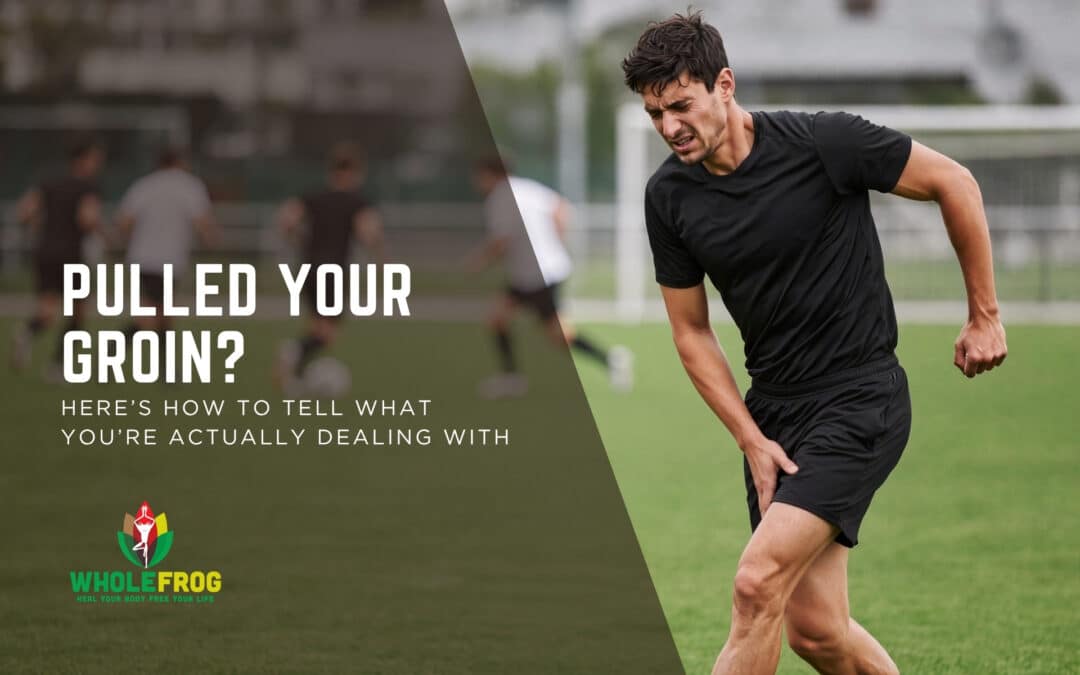
If you’re looking up groin strain recovery, you’ve probably already heard the standard advice: rest it until it stops hurting. That’s about half right. The other half is why so many groin pulls drag on for weeks longer than they need to.
Here’s the piece most people skip: not every groin strain is the same injury. Treat a minor tweak like a serious tear, and it drags on for weeks instead of days.
What’s Actually Happening With a Pulled Groin Muscle
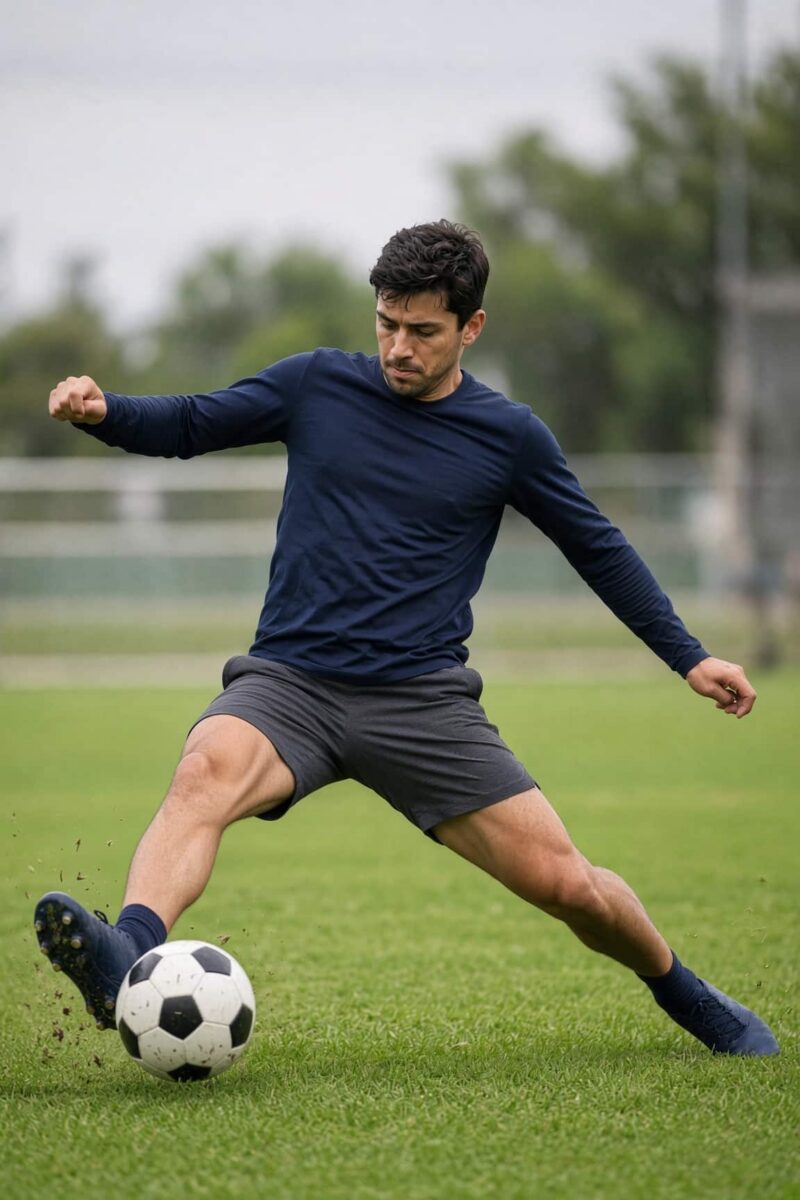 The groin muscles (the adductors, running along your inner thigh) pull your legs back toward the midline. They work hardest during sprinting and kicking. Sudden changes of direction load them the same way, stretching and loading the muscle at once. That combination is what strains the fibers.
It’s also one of the most common strains in cutting and kicking sports. Groin strains show up in roughly 1 out of every 10 hockey injuries, and 1 out of 20 soccer injuries.
Once it happens, your body reacts the same way it does to any soft-tissue strain. It tightens everything around the area to protect it, the same pattern we’ve seen with ankle sprains and hamstring pulls. That tightening is useful for the first day or two.
Left unchecked, though, it doesn’t turn off on its own. It just stays tight, long after the actual strain has healed underneath it. That’s why a pulled groin muscle can still feel “off” long after the pain fades.
Which Groin Strain Grade Are You Dealing With?
This is the piece that actually changes your groin strain recovery timeline. Almost nobody checks it before deciding to “just rest it.”
Mild. Some tightness or a pulling sensation, but you’re walking normally and your strength feels close to normal. This is where gentle movement, not total rest, gets you back fastest.
Moderate. A noticeable strength drop, some bruising, and a limp when you walk. This one needs a more careful, guided approach to loading it back up.
Severe. A sharp pop at the moment it happened, visible bruising, and real trouble putting weight on it. Skip the guesswork on groin strain recovery here and get hands-on care involved right away rather than waiting it out.
If you’re in the mild range, the self-care below is exactly what you need. If anything above sounds like moderate or severe, stop guessing and get it checked.
What Groin Strain Recovery Actually Looks Like (Mild Cases)
 The instinct to fully rest it for a week feels responsible. It’s also usually why the tightness lingers. A groin that never moves through its range doesn’t get the signal that it’s safe to let go. So it just stays braced. That’s the real answer to “groin strain how long to heal.” It depends less on the strain itself, and more on whether you keep it moving.
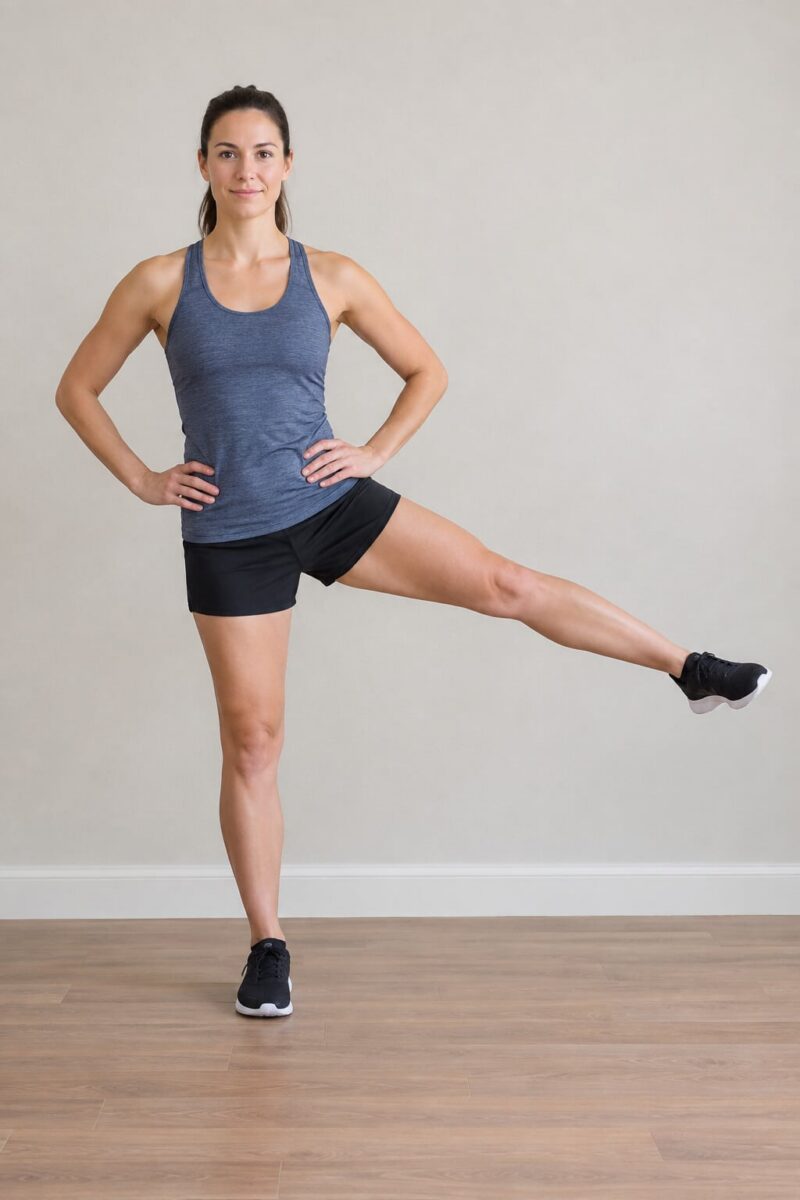
After the first 24 to 48 hours of rest, ice, and light compression, start gentle, pain-free range of motion. Slow, controlled standing leg swings, side to side, moving only as far as feels easy. A few sets of 10 to 12, once or twice a day. No forcing it, no bouncing. That controlled movement tells the muscle it’s safe to release, instead of staying braced against an injury that’s already healing.
That’s the same logic behind every strain we treat this way. The tissue needs a reason to let go, and total rest never gives it one.
Ready to Move Freely Again?
Watching your own body respond this way is part of what our Full Range Method teaches. And knowing you can help it along yourself is what real groin strain recovery is built on.
That’s the power of becoming a WholeFrog®: mastering your body through our FullRange program.
Don’t just take our word for it, we have 100’s of reviews on Yelp and Google!
If you don’t have time to be sidelined, book a consultation or one of our services with the Navy Seals of Wellness.
New to WholeFrog®? Please complete our New Client Intake Form at least 24 hours before your visit, whether you’re booking a complimentary consultation or a service. If you have X-ray, MRI, or lab reports you’d like us to review before your visit, please scan and upload them here.