
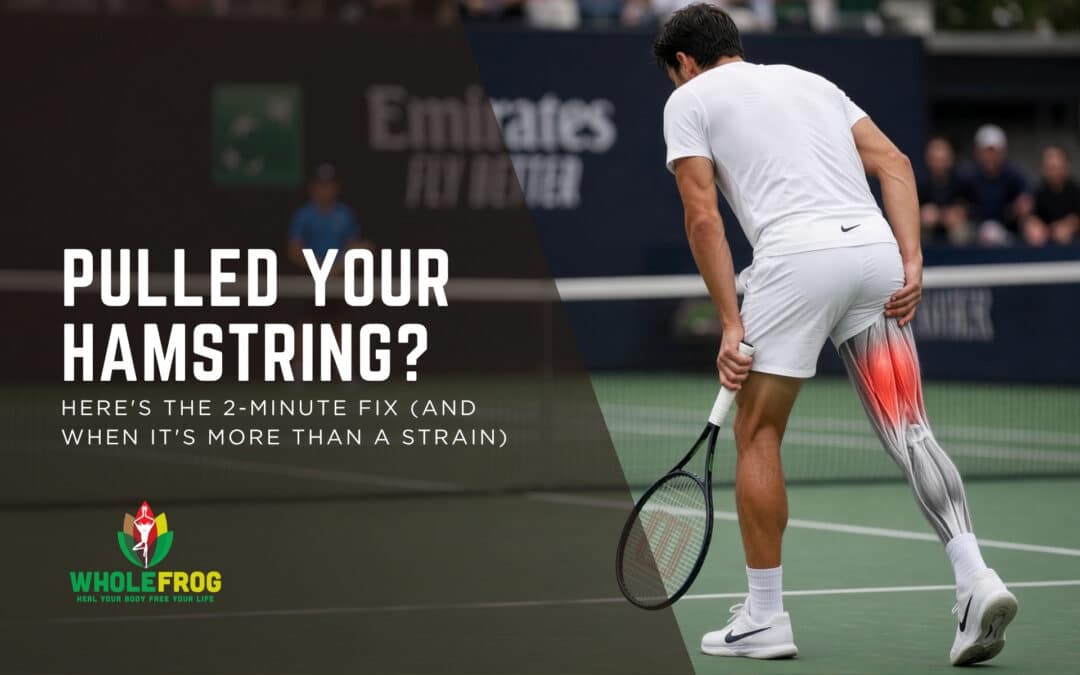
Felt that sharp grab in the back of your thigh mid-sprint, and it’s still tight days later?
You’re not alone. Hamstring pulls are one of the most common injuries fall sports bring in. Most people handle it the same way: rest it, maybe stretch it a little, and wait. But “wait it out” is usually why it stays tight for weeks instead of days.
Why Hamstrings Pull So Easily
 The hamstring works hardest at the worst possible moment: sprinting, cutting, sudden stops, all while it’s lengthening and under load at once. That’s exactly when a strain happens. Once it does, your body reacts the same way it does to any soft-tissue injury. It tightens everything around the strain to protect it.
That protective tightening is normal and useful for the first couple of days. The problem is it doesn’t turn itself off on a schedule. It just stays tight until something tells it the danger has passed.
Why Rest Alone Keeps It Tight
This is the part that trips people up. Resting a hamstring completely feels like the safe choice, so people do it for a week, sometimes two. But a hamstring that never moves through its range doesn’t get the signal that it’s safe to let go. It just stays braced. That’s why so many “healed” hamstrings still feel tight or slightly off weeks after the initial pain is gone.
The 2-Minute Fix
After the first 2 to 3 days of rest, gentle movement is what actually helps. Try slow, controlled hamstring curls while standing, moving through a comfortable range with no bouncing and no forcing it. Do a few sets of 10 to 12, once or twice a day, slowly enough that you feel the muscle working without pain. This tells the tissue it’s safe to move again, instead of leaving it braced for good.
That’s not a stretch-and-hope routine. It’s controlled movement, and that sends a different signal to the muscle than a static stretch does.
When It’s More Than a Strain
 Most tightness responds well to a few days of the fix above. A few signs mean it’s time to get help instead of pushing through it on your own. Watch for pain when standing up straight or walking normally. Bruising down the back of the leg is another sign. So is not being able to fully straighten the knee after three or four days. These signs point to a deeper strain than simple tightness, and home care alone won’t close that gap.
Ready to Get Back in the Game?
WholeFrog® has a team of R.N.’s, medical rehabilitative specialists, trained Full Range coaches, and certified massage therapists. Fitness trainers and physical therapists send us their own toughest cases, because we fix training injuries and failed physical therapy faster than typical, and we guarantee our work. Hamstring strains are one of the most common injuries fall sports bring in, and they almost always respond well to the right hands-on care.
That’s the power of becoming a WholeFrog®: mastering your body through our FullRange program.
Don’t just take our word for it, we have 100’s of reviews on Yelp and Google!
If you don’t have time to be sidelined, book a consultation or one of our services with the Navy Seals of Wellness.
New to WholeFrog®? Please complete our New Client Intake Form at least 24 hours before your visit, whether you’re booking a complimentary consultation or a service. If you have X-ray, MRI, or lab reports you’d like us to review before your visit, please scan and upload them here.